如何在天文学中正确的起步英文原文
著:Alan Macrobert 译:Shea


  “亲爱的《天空和望远镜》的编辑,”信是这样开始的,“我今年20岁,刚刚涉足天文学,平日里,繁星和宇宙总是让我着迷。在入门上,你们是否能够给我一点建议,使我能从天文学中得到最大的乐趣?”

  这是一个好问题,一个值得好好回答的问题。在走了不少弯路之后,许多刚入门的爱好者带着恼怒给我们打电话寻求帮助,这样的经历,广泛存在,产生了一个普遍的印象:天文学入门很难。但是这仅仅是假象,而且完全不必要。

  许多其他的爱好拥有杂志、协会和积极的俱乐部,已经发展了许多高效的方法来引导初学者,为什么我们不能?对于星友,如果在起步时,有一些简单、精心选择的路标为他们引路,那这些新兴的天文学家会取得更多的成功。

  什么样的建议对初学者最有帮助?《天空和望远镜》的编辑为此群策群力,聚集近100年来回答电话和信件的经验,我们提出一系列的建议来帮助新手越过陷阱,步入成功之路。

  1.彻底搜查你的公共图书馆。天文学是一个富含知识的兴趣爱好。它的乐趣来自于勤于思考之后的发现以及获得有关神秘夜空的知识。但是,除非你住在一个特别庞大并且活跃的天文俱乐部附近,否则你不得不靠自己去发现新事物,获取新知识,换句话说,你必须靠自学。

  公共图书馆是初学者最重要的天文工具。或许,你会在那儿找到《天空和望远镜》杂志,彻底搜寻天文书架寻找入门的指导书。寻找书籍来帮你认识在夜空中所能看到的恒星。最好是有每期的《天空和望远镜》中所带的两大张的星图。一旦有个问题吸引住了你,深入下去,寻找要进一步的资料。

  许多人的第一冲动是通过电话寻找其他人来帮助他完成知识的学习——一个晚上的课程,去天文馆或是第三方的帮助。这些帮助可能是令人兴奋有帮助的,但它不会给你现在所需要的东西,而且你浪费了本应用于观测的大量时间。自学是通过书、图书馆及自我努力来实现的。

  2.用肉眼观察夜空。天文是户外的亲近大自然的爱好。走入夜空,学习星星的名字及他们组成的图案。《天空和望远镜》总会向爱好者们提供大而全的全天星图。其他的书籍及资料会有关星座的知识以及神话故事的资料,并且显示恒星是如何随季节变化的。如果你深入下去,有一天你走到户外指着一颗星说:“瞧,这是大角星!”你会有一种洞悉整个宇宙的感觉,这种感觉会提供你无限的快乐,并伴随你一生。
  3.不要急着地去买望远镜。许多爱好者需要一大笔钱的先期投入。但是,对于天文学,作为一种爱好,不需要“入门费”。相反地,花钱并不会买来入门之路。

  钻牛角尖是初学者最常犯的错误。有半数人打电话给我们寻求帮助问:“我如何使用×××望远镜,能看到些什么?!”他们认为一大笔的支出是入门必不可少的第一步。

  这往往不奏效。要有回报的使用望远镜,你必须用肉眼来认识星座,这样你才能在天空中找到你所需要的东西,识别并欣赏它们。

  那有没有捷径呢?近几年计算机控制望远镜已投放市场,他可以使自动的指向目标。它们代表了一个巨大的革新,你不需要认识星空了。

  一旦安装完毕,一台计算机控制望远镜比用老方法认识星空、使用星图快得多——假设你知道什么东西值得一看的话。但,它们很贵,并且有些部件彼此不通用,对于初学者,至少有一种共识,计算机控制望远镜可以成为你的拐杖,使你不用学习认识星空,并且,一旦任何部件出错,使你感到无助。另外,你失去了亲自在宇宙中漫步的机会。在繁星点点的壮丽星空下,我们看到初学者花费本应用于观测的数小时来摆弄这些电子设备。这是否是一些老顽固在吹毛求疵?还请你自己判断。

  4.从双筒望远镜开始。从各方面讲,一副双筒镜才是真正的“起步望远镜”。双筒镜拥有较大的视场,使你很容易的找到目标;一台大望远镜仅放大一个极小的区域,很难在天空中定位。双筒镜可以给你提供一个正像并且像就在你的前方,使你清楚的知道你正在观测的目标。天文望远镜则提供一个倒像,有时还是镜像,并且还于光路垂直。同时双筒镜确实不贵,随处可以买到,容易携带、存放。
  而且它们的表现实在是让人称道。普通的7至10倍的双筒镜对你裸眼观测能力的改善相当于一台好的业余望远镜对双筒望远镜的改善。换句话说,你只花了1/10到1/4的钱便走完了一半的路程——具有极高的性能价格比。

  对于天文爱好者来说,物镜越大越好。好的光学质量也极其重要。但任何的双筒镜却已足以开启你的天文之路。

  5.认真对待星图和指导书。一旦你有了双筒镜,你用它们来干点什么呢?你可以观测月亮来寻找乐趣,或是搜寻银河中的恒星,但不久你就会厌倦这些。可是,如果你已认识星座并且有详细的星图,那双筒镜可以让你忙上一辈子了。

  用它们可以看到绝大多数的“梅西耶”天体。它们可以向你展示木星卫星的位置变化,以及金星的盈亏。在月球上,你可以认识许多环形山、平原和山脉的名字。你可以分解那些五颜六色的双星并且可以花费数年的时间来追踪变星的亮度变化。条件是你知道该怎样做。

  一个游历于各大洋的水手需要一流的海图,对于游历于星空的天文爱好者也是如此。好的星图可以带来寻找夜空中神秘天体的乐趣。许多参考书都介绍了该如何寻找这些天体以及这些天体的特性。另外,你在使用双筒镜时获得的有关技巧对你将来充分使用大望远镜是极其有帮助的。

  6.寻找其他的爱好者。自学固然不错,但是缺乏与其他爱好者的交流。在北美大约有超过400个的天文俱乐部。给离你家近的俱乐部打电话。也许你会得到参加每月例会的邀请或是去参加夜间观测活动还可以结交新朋友。俱乐部从小到大,从死气沉沉到充满活力各式各样。但是没有一个会主动向你提供电话号码,除非他们希望你能加入。

  计算机网络提供了又一种联络其他爱好者的方法。CompuServe、GEnie、美国在线都有活跃的天文专区。他们提供许多有趣的新闻,并且有聊天室,那儿的爱好者和乐意向你提供帮助、意见和建议。

  7.当买望远镜的时刻到来时,请仔细斟酌。最终,你会感到是时候了。你要花费数小时来钻研书籍以及广告小册子。你会了解到许多不同的望远镜,并且应该明白什么是你所期望的,并且你能用你选的望远镜干点什么。

  现在不是牺牲质量来换取节省资金的时候;远离那些不结实的、半玩具的“百货商店”望远镜。你所需要的望远镜必须满足两大必要条件。一个是坚固稳定,运转平稳顺滑。其二是有较高的光学质量——达到“衍射极限”或更好。你也许想要更大的口径,但是不要忘了便携性和方便性。望远镜不该太重,那样你无法把它搬到室外,方便的安装拆卸。古话说的好:“对你来说,最好的望远镜就是你最常用的望远镜。”

  买不起它?攒钱到你可以承受为止。为了攒钱多使用一年双筒镜会使你终生难忘。把积攒到一半的钱用于买二手货是极愚蠢的,那只会使你失望。或者考虑自己造望远镜,许多俱乐部都会向你提供帮助。

  8.丢掉你的傲气。天文学会教会你耐心以及谦逊。对于云层锁住你的视线,对于暗弱的星光,对于只因晚起床几分钟使筹划了很久的计划泡汤,你都无能为力。宇宙不会屈从于你的意志,你必须遵循她的节奏。

  大多数在望远镜搜寻范围内的天体,无论多大,或是多小,都勉强能被找到。你花了很长时间去搜寻的大多数天体都很暗弱,很小,或两者都是。如果那些华而不实的画面是你所期望看到的,那你该去看电视。

  “值得”是天文爱好者的回答,凭着谦逊以及不屈不挠的精神,最终他们将得到回报。Ken Fulton写了一本书《无忧无虑的天文学家》(1984),它把天文学描绘成从满着陷阱、流沙以及猛兽的地方,只有那些拥有者非凡的技能的艺术家才能越过这些障碍而不受伤害。实际情况并没有这样糟——但有时一个平稳的心态会帮你渡过难关。

  9.放松并寻找乐趣。丢掉傲气就不会使你由于你的望远镜还够不上完美而感到遗憾。完美并不存在,不论你花多少钱。不要感到被迫去清洁物镜或是去整理观测笔记。

  同时不要感到被强迫去做一些“有价值的工作”。最终,诚然对天文爱好者来说最大的回报是收集科学数据——冒险进入荒蛮之地,带回一些数据,它们虽然小但却真的能完善人类对宇宙的认识。这即是从“初学者”到“高级业余天文学家”,从偶然的观星者到宇宙的痴迷者的转变。但这仅对一些人有效,并且只当他们准备好时。

  业余天文学应该是平静的、充满乐趣的。如果你发现你因为目镜的偏差或是看不见冥王星而变得不快,请深呼吸一下并且记住你做这些是因为你喜欢。放轻松,让天文学去适合你。


   译自 Sky & Telescope(http://www.skypub.com

How to Start Right in Astronomy
Chinese Version
By Alan MacRobert


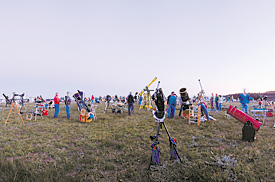
 Comrades of the night. Astronomy can acquire new dimensions for those who find a compatible club. Here invisible enthusiasts, marked only by their red flashlights, move about the grounds of the 70-year-old Stellafane clubhouse in Springfield, Vermont, beneath the stars of Sagittarius. Six-minute time exposure by Kevin B. Jones. 

 "DEAR SKY & TELESCOPE," the letter began. "I am 20 years old and new to astronomy. I have always been fascinated with the stars and universe. What would you suggest my first step be to get into the hobby, so that I might get the most enjoyment out of it?" 

 It's a good question, one that deserves better answers than most beginners find. Many newcomers to astronomy call us in exasperation after blundering down some wrong trail that leaves them lost and frustrated. Such experiences, widely shared, create a general public impression that astronomy is a tough hobby to get into. But this impression is altogether wrong and unnecessary. 

 Many other hobbies that have magazines, conventions, and vigorous club scenes have developed effective ways to welcome and orient beginners. Why can't we? For starters, novice astronomers would have more success if a few simple, well-chosen direction signs were posted for them at the beginning of the trail. 

 What advice would help beginners the most? Sky & Telescope editors brainstormed this question. Pooling thoughts from nearly 100 years of collective experience answering the phone and mail, we came up with a number of pointers to help newcomers past the pitfalls and onto the straightest route to success. 

 1. Ransack your public library. Astronomy is a learning hobby. Its joys come from intellectual discovery and knowledge of the cryptic night sky. But unless you live near an especially large and active astronomy club, you have to make these discoveries, and gain this knowledge, by yourself. In other words, you need to become self-taught. 

 The public library is the beginner's most important astronomical tool. Maybe you found Sky & Telescope there. Comb through the astronomy shelf for beginner's guides. Look for aids to learning the stars you see in the evening sky. One of the best is the big two-page sky map that appears near the center of every month's Sky & Telescope, which the library should have. When a topic interests you, follow it up in further books. 

 Many people's first impulse, judging from the phone calls, is to look for someone else to handle their education -- an evening course offering, a planetarium, or some other third party. These can be stimulating and helpful. But almost never do they present what you need to know right now, and you waste an enormous amount of time commuting when you should be observing. Self-education is something you do yourself, with books, using the library. 

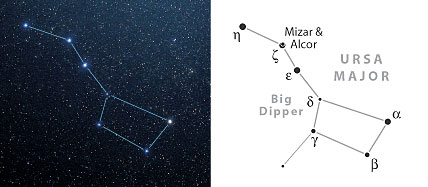
 2. Learn the sky with the naked eye. Astronomy is an outdoor nature hobby. Go into the night and learn the starry names and patterns overhead. Sky & Telescope will always have its big, round all-sky map for evening star-finding. Other books and materials will fill in the lore and mythology of the constellations the map shows, and how the stars change through the night and the seasons. Even if you go no further, the ability to look up and say "There's Arcturus!" will provide pleasure, and perhaps a sense of place in the cosmos, for the rest of your life. 

 3. Don't rush to buy a telescope. Many hobbies require a big cash outlay up front. But astronomy, being a learning hobby, has no such entrance fee. Conversely, paying a fee will not buy your way in. 

 Thinking otherwise is the most common beginner's mistake. Half the people who call for help ask, "How do I see anything with this %@&*# telescope?!" They assumed that making a big purchase was the essential first step. 

 It doesn't work that way. To put a telescope to rewarding use, you first need to know the constellations as seen with the naked eye, be able to find things among them with sky charts, know something of what a telescope will and will not do, and know enough about the objects you're seeking to recognize and appreciate them. 

 The most successful, lifelong amateur astronomers are often the ones who began with the least equipment. What they lacked in gear they had to make up for in study, sky knowledge, map use, and fine-tuning their observing eyes. These skills stood them in good stead when the gear came later. 

 Is there a shortcut? In recent years computerized, robotic scopes have come on the market that point at astronomical objects automatically. They represent an enormous change. No longer do you need to know the sky. 

 Once fully set up, a computerized scope is a lot faster than the old way of learning the sky and using a map -- assuming you know what's worth telling the computer to point at. But they're expensive, and opinions about them are divided. For beginners, at least, there's some consensus that a computerized scope can be a crutch that prevents you from learning to get around by yourself and will leave you helpless if anything goes wrong. Moreover, you miss out on the pleasures of making your own journeys through the heavens. 

 At star parties beneath gorgeous black, star-sprinkled skies, we have seen beginners struggling for hours with electronics when they should have been sweeping the heavens overhead. Is this just the carping of old fogeys? The jury is still out. 

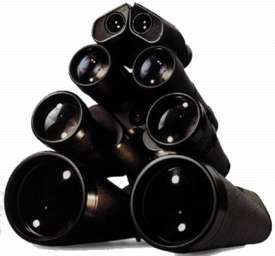
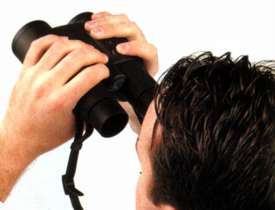
 4. Start with binoculars. A pair of binoculars is the ideal "first telescope," for several reasons. Binoculars show you a wide field, making it easy to find your way around; a higher-power telescope magnifies only a tiny, hard-to-locate spot of sky. Binoculars give you a view that's right-side up and straight in front of you, making it easy to see where you're pointing. An astronomical telescope's view is upside down, sometimes mirror-imaged, and usually presented at right angles to the line of sight. Binoculars are also fairly inexpensive, widely available, and a breeze to carry and store. 

 And their performance is surprisingly respectable. Ordinary 7- to 10-power binoculars improve on the naked-eye view about as much as a good amateur telescope improves on the binoculars. In other words they get you halfway there for something like a tenth to a quarter of the price -- an excellent cost-benefit ratio. 

 For astronomy, the larger the front lenses are the better. High optical quality is important too. But any binocular that's already knocking around the back of your closet is enough to launch an amateur-astronomy career. 

 5. Get serious about maps and guidebooks. Once you have the binoculars, what do you do with them? You can have fun looking at the Moon and sweeping the star fields of the Milky Way, but that will wear thin after a while. However, if you've learned the constellations and obtained detailed sky maps, binoculars can keep you busy for a lifetime. 

 They'll reveal most of the 110 "M objects," the star clusters, galaxies, and nebulae cataloged by Charles Messier in the late 18th century. Binoculars will show the ever-changing positions of Jupiter's satellites and the crescent phase of Venus. On the Moon you can learn dozens of craters, plains, and mountain ranges by name. You can split scores of colorful double stars and spend years following the fadings and brightenings of variable stars. If you know what to look for. 

 A sailor of the seas needs top-notch charts, and so does a sailor of the stars. Fine maps bring the fascination of hunting out faint secrets in hidden sky realms. Many reference books describe what's to be hunted and the nature of the objects you find. Moreover, the skills you'll develop using maps and reference books with binoculars are exactly the skills you'll need to put a telescope to good use. 

 6. Find other amateurs. Self-education is fine as far as it goes, but there's nothing like sharing an interest with others. There are more than 400 astronomy clubs in North America alone -- see Sky & Telescope's Astronomical Directory right here on the Sky & Telescope Web site. Call the clubs near you. Maybe you'll get invited to monthly meetings or nighttime star parties and make a lot of new friends. Clubs range from tiny to huge, from moribund to vital. But none would have published a phone number unless they hoped you would call. 

 Computer networks offer another way to contact other amateurs. CompuServe, GEnie, America Online, and the Internet all have active astronomy areas. These present a constant flow of interesting news and chatter by amateurs who are quick to offer help, opinions, and advice. 

 7. When it's time for a telescope, plunge in deep. Eventually you'll know you're ready. You'll have spent hours poring over books and ad brochures. You'll know the different kinds of telescopes, what you can expect of them, and what you'll do with the one you pick. 

 This is no time to scrimp on quality; shun the flimsy, semi-toy "department store" scopes that may have caught your eye. The telescope you want has two essentials. One is a solid, steady, smoothly working mount. The other is high-quality optics -- "diffraction-limited" or better. You may also want large aperture (size), but don't forget portability and convenience. The telescope shouldn't be so heavy that you can't tote it outdoors, set it up, and take it down reasonably easily. The old saying is true: "The best telescope for you is the one you'll use the most. 

 Can't afford it? Save up until you can. Another year of using binoculars while building a savings account will be time you'll never regret. It's foolish to blow half-accumulated telescope money on something second rate that will disappoint. Or consider building the scope yourself, an activity that many clubs support. 

 8. Lose your ego. Astronomy teaches patience and humility -- and you'd better be prepared to learn them. There's nothing you can do about the clouds blocking your view, the extreme distance and faintness of the objects you desire most, or the timing of the long-anticipated event for which you got all set up one minute late. The universe will not bend to your wishes; you must take it on its own terms. 

 Most of the objects within reach of any telescope, no matter how large or small it is, are barely within its reach. Most of the time you'll be hunting for things that appear very dim, small, or both. If flashy visuals are what you're after, go watch TV. 

 "Worthiness" is the term entering the amateur language for the humble perseverance that brings the rewards in this hobby. The term was coined by Ken Fulton, author of The Light-Hearted Astronomer (1984) -- a book describing the hobby as a jungle full of snares, quicksand, and wild beasts that only those with the spiritual skills of a martial artist can traverse unmauled. It's really not that bad -- but there are definitely times when a Zen calmness will help you through. 

 9. Relax and have fun. Part of losing your ego is not getting upset at your telescope because it's less than perfect. Perfection doesn't exist, no matter what you paid. Don't be compulsive about things like cleaning lenses and mirrors or the organization of your observing notebook. 

 And don't feel compelled to do "useful work" right away. Ultimately, the most rewarding branches of amateur astronomy involve scientific data collecting -- venturing into the nightly wilderness to bring home a few bits of data that will advance humanity's knowledge of the universe in some tiny but real way. Such a project often marks the transformation from "beginner" to "advanced amateur," from casual sightseer to cosmic fanatic. But it only works for some people, and only when they're good and ready. 

 Amateur astronomy should be calming and fun. If you find yourself getting wound up over your eyepiece's aberrations or Pluto's invisibility, take a deep breath and remember that you're doing this because you enjoy it. Take it only as fast or as slow, as intense or as easy, as is right for you. 


   From Sky & Telescope(http://www.skypub.com

▲ BACK